Jeonju Hanok Village is located in the city of Jeonju. There are 735 traditional Korean hanok houses. While the rest of city has been industrialized, Hanok Village retains its historical charms and traditions.Jeonju Hanok Village is especially beautiful for its unique roof edges, which are slightly raised to the sky. Hanok houses are generally divided into two sections, Anchae and Sarangchae. Sarangchae is where the men dwell, and is referred to as the Seonbi room. Because men and women had to remain separate, Anchae is situated deep inside the house so that it is secretive and quiet.Another trait of Hanok is that all the houses are heated with ondol, a unique sub-floor heating system. Since Koreans enjoy sitting, eating, and sleeping on the floor, it needs to remain heated. A part of Hanok has been set aside so that tourists can experience traditional Korean life, called Hanok Life Experience Hall. You can enter the rooms to experience the warm floor first-hand. An advantage of this system is that it is warm in the winter and cool in the summer.The food provided is very traditional, which adds to the traditional ambience. At Jeonju Hanok Village, visitors can enjoy traditional Korean life and traditional foods like bibimbap, the most well known dish from the Jeonju region.

Credits and Read for more info: Korea Tourism Organization
Bibimbap, a bowl of rice mixed with meat and assorted vegetables, is one of the all time favorite meals of the Korean people, regardless of age or generation. Its popularity has also grown internationally with the spread of hallyu, or Korean “wave.” Even some Hollywood celebrities have praised its nutritional value and talked about how it has helped them maintain a healthy diet.What’s more, the dish can easily be prepared for vegetarians as well! Restaurants with various versions of the dish have been popping up in different parts of the world, and these creative adjustments to the dish give it an added visual appeal and taste, making them well-received by international customers. Thanks to its gaining popularity, bibimbap is now being intensively studied for menu development and researched for its nutritional benefits.
![]() |
| Bibimbap served in stone pot and brass bowl |
Credits and Read for more info: Korea Tourism Organization
| All these side dishes! Looove! |
| Charcoal-grilled pork and beef |
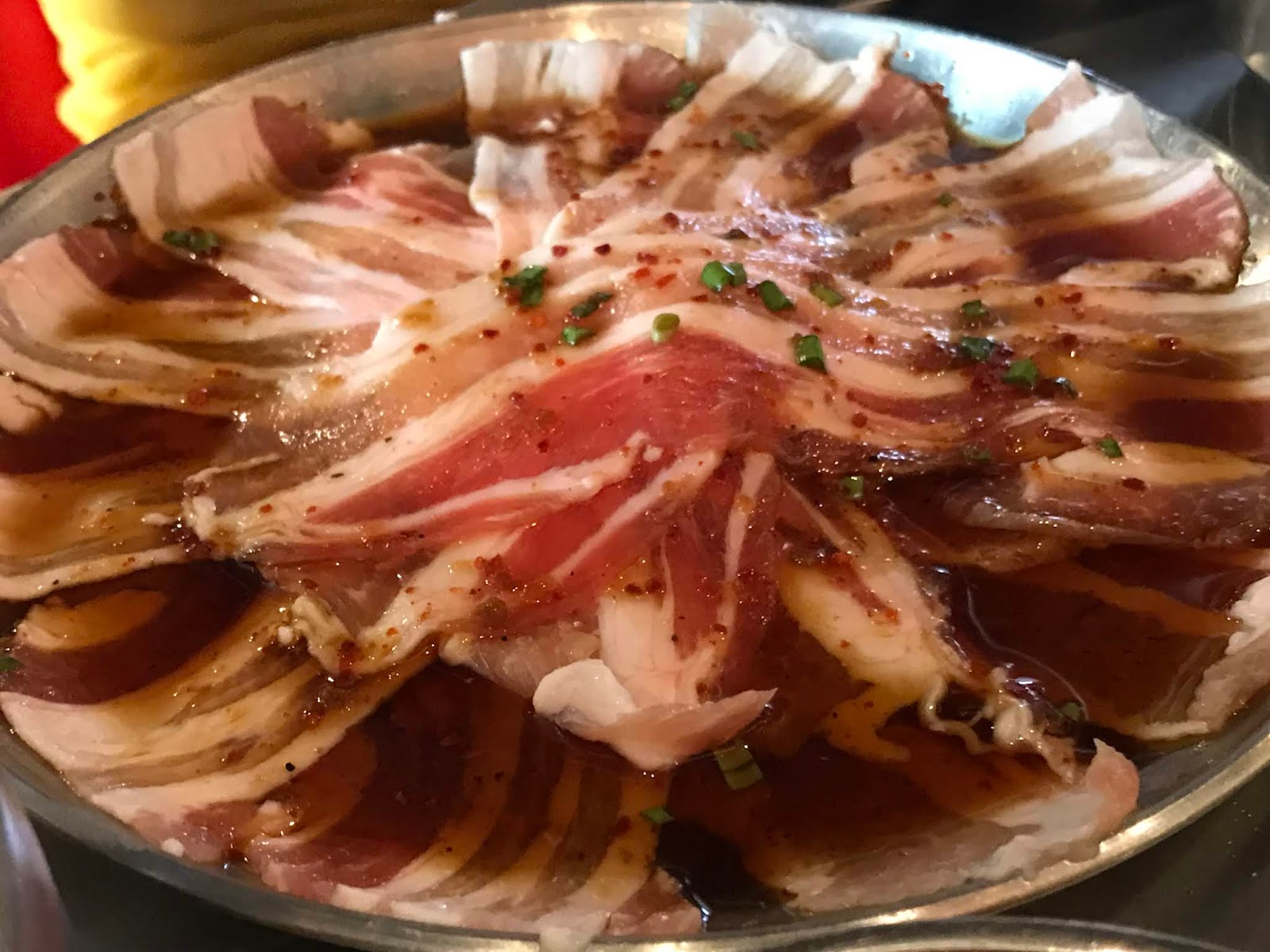
Samgyeopsal-gui means grilled pork belly in Korean cuisine.
The meats are usually marinated or seasoned and accompanied with different kinds of side dishes like kimchi, japchae, fish cake; vegetables like lettuce, radish salad, cucumber, potatoes and more.
This is one of my favorite Korean foods! Best to eat when you get to hangout with family and friends!
| Cheese Dak-galbi (spicy stir-fried chicken) |
| Oooh, look at that! So yummy!~ |
Dak-galbi is Chuncheon's most popular dish! It's a mix of ingredients that includes marinated chicken, cabbage, potatoes, tteok bokki (Korean rice cakes) - topped with sweet and spicy gochujang (fermented Korean chili paste) sauce!
You don't need to travel to Gangwon to have a taste of this special dish! Looking for a place to eat in Myeongdong, we found this restaurant. It was our first time to try dak-galbi and it's just so good, definitely worth it!